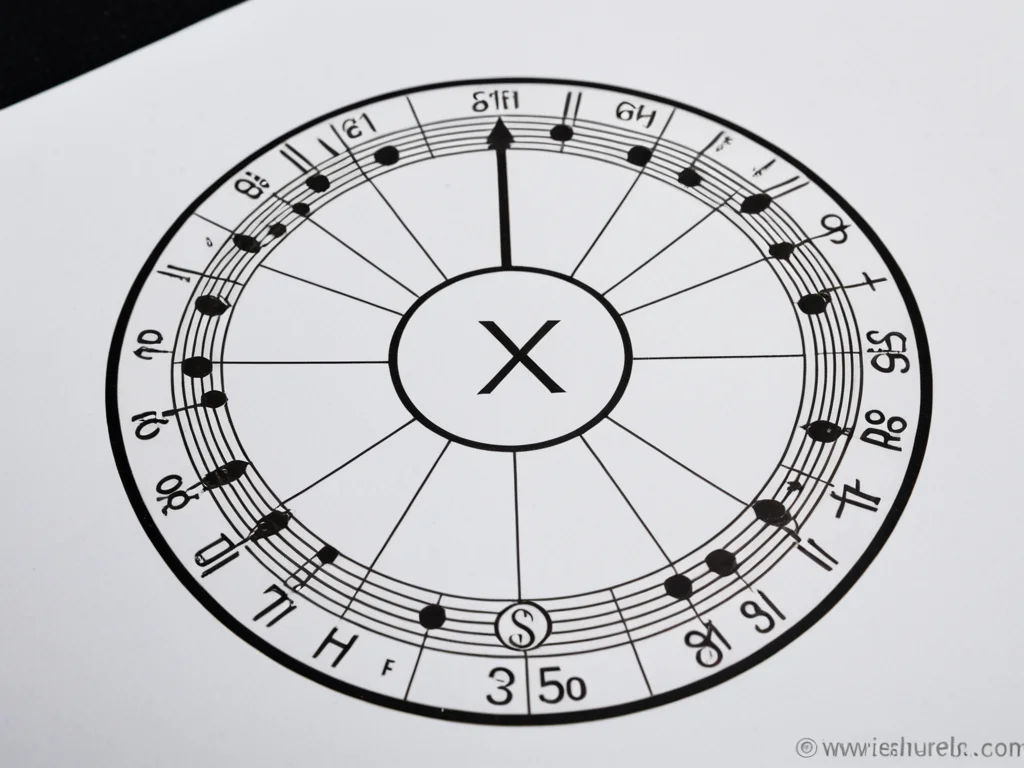
Introduction to the Circle of Fifths
The Circle of Fifths, also known as the cycle of fifths, is a fundamental concept in music theory. It's a visual representation that arranges all twelve musical keys into a circle based on their relationship by perfect fifth intervals. This makes it easier to understand key signatures and chord progressions.
What Is the Circle of Fifths?
The Circle of Fifths is a diagram that shows how each major key relates to its neighboring keys by moving up or down in fifths. For example, if you start at C major and move clockwise, you'll find G major (C's fifth), then D major (G's fifth), and so on.
How Does the Circle of Fifths Work?
The circle works by placing each key in order based on its perfect fifth interval. Each step around the circle represents moving up a fifth, which means the next key will have one more sharp (or flat) than the previous one.
Sharp Keys
- C major: No sharps or flats
- G major: 1 sharp
- D major: 2 sharps
This pattern continues clockwise, adding one more sharp with each step around the circle.
Flat Keys
- C major: No sharps or flats
- F major: 1 flat
- Bb major: 2 flats

Moving counterclockwise, you add one more flat with each step.
Understanding Key Signatures
The circle helps musicians quickly identify the key signatures of all twelve major keys. For instance, if a piece is in D major, you know it will have two sharps (F# and C#).
Identifying Related Keys
If you're playing in one key, such as G major, the circle can show you that its relative minor (Em) is just a third to the left.
Using the Circle of Fifths for Chord Progressions
The Circle of Fifths also aids in understanding chord progressions. For example, I-IV-V progression in C major would be C-G-F (the IV and V chords are directly adjacent).
Common Chord Patterns
- I-IV-V: Common in rock and blues.
- ii-V-I: Used frequently in jazz.

The circle makes it simple to find these patterns by moving around the diagram.
Practical Tips for Using the Circle of Fifths
- Use flashcards or a chart to memorize key signatures and their relationships.
- Create exercises that involve playing chords from different keys based on the circle.
Practice with scales, arpeggios, and chord progressions in various keys to deepen your understanding of the circle's usefulness.
Mistakes to Avoid
- Avoid confusing sharps and flats. Remember that clockwise moves add sharps; counterclockwise moves add flats.
- Don't rely solely on memory without visual aids like the actual diagram or charts for reference.
Making these mistakes can slow your learning process, so be sure to double-check your work as you practice with the circle of fifths.