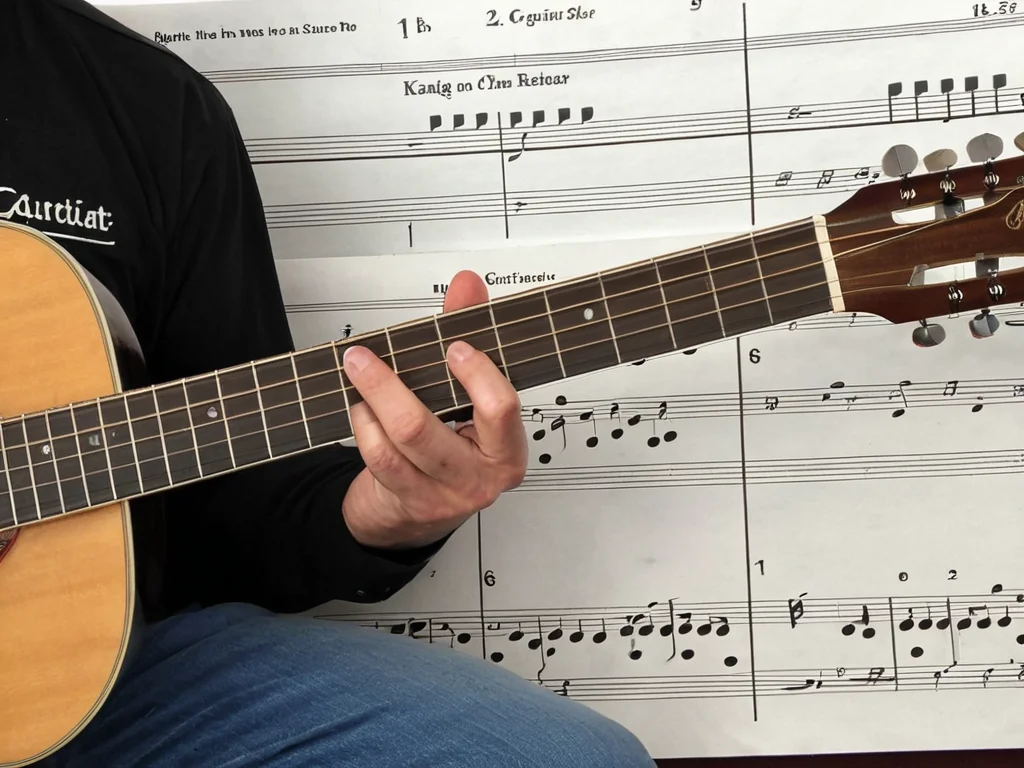
The major scale is a fundamental concept in music theory and forms the basis for many melodies, chords, and progressions. It consists of seven notes that follow a specific pattern: whole step, whole step, half step, whole step, whole step, whole step, half step (W-W-H-W-W-W-H).
Understanding the Structure
A major scale can start on any note. Let's use C as our starting point to explore its structure and how to play it both on guitar and piano.
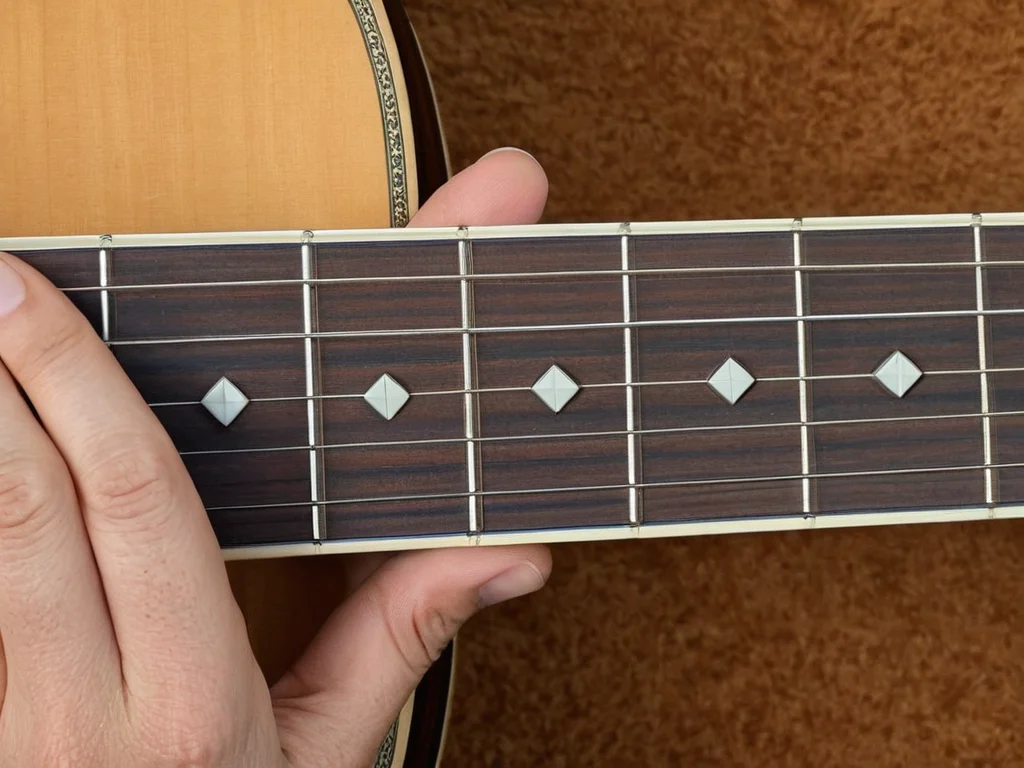
C Major Scale on Guitar
- Fret the 8th fret of the 6th string (E)
- Play the 7th fret of the 5th string (B)
- Play the open A string (A)
- Fret the 2nd fret of the 4th string (D)
- Play the open G string (G)
- Fret the 3rd fret of the 3rd string (C)
- Play the 1st fret of the 2nd string (E)
This sequence represents the C major scale: C-D-E-F-G-A-B-C. You can practice this by starting on any note and following the W-W-H-W-W-W-H pattern.
C Major Scale on Piano
- Press the white keys from middle C (C) to high C (C)
- The notes are: C-D-E-F-G-A-B-C
According to Piano Street, understanding the major scale helps in building a strong foundation for music theory and performance.
C Major Scale Exercises
To master the C major scale, practice it in different ways. Here are some exercises:
- Play the scale using your right hand while tapping out the rhythm with your left foot.
- Create melodies by playing around the notes of the scale.
- Transpose the scale to other keys and try playing it on both guitar and piano.
Common Mistakes
Mistakes are a natural part of learning. Here are some common mistakes to avoid:
- Failing to observe the half-step intervals, which can make your scale sound dissonant.
- Omitting the key signature, which is crucial for correct playing on piano and understanding on guitar.
Practical Tips
To improve your practice routine:

- Start slow and gradually increase speed as you become more comfortable with the scale.
- Practice in different positions to develop muscle memory across the fretboard.
- Record yourself playing the scale and listen back to identify areas for improvement.
Next Steps
Once you're confident with the C major scale, try:
- Moving on to other major scales (D major, E major, etc.).
- Incorporating the scale into your practice by playing arpeggios and chords.
- Exploring more complex music theory concepts like modes and chord progressions based on the major scale.
According to Pianote, mastering scales is essential for developing a strong musical foundation. Regular practice will not only improve your technique but also deepen your understanding of music theory.