
Introduction
If you're looking to add a new dimension to your guitar playing, mastering the palm muting technique is essential. This guide will walk you through everything you need to know about this fundamental skill, from basic principles to advanced applications.
The Basics of Palm Muting
Palm muting involves lightly pressing the side of your picking hand against the strings near the bridge. The goal is not to completely silence the strings but rather to dampen their vibrations, creating a percussive and controlled sound.
To start, rest your thumb or the heel of your picking hand just behind the guitar's bridge. This position allows you to mute the strings while still being able to play notes clearly.
Tip: The key is to maintain consistent pressure with your palm throughout your playing. Too much pressure can deaden your sound, while too little may not achieve effective muting.
Basic Exercise for Palm Muting
To get comfortable with the technique, start by practicing basic power chords and strumming patterns.
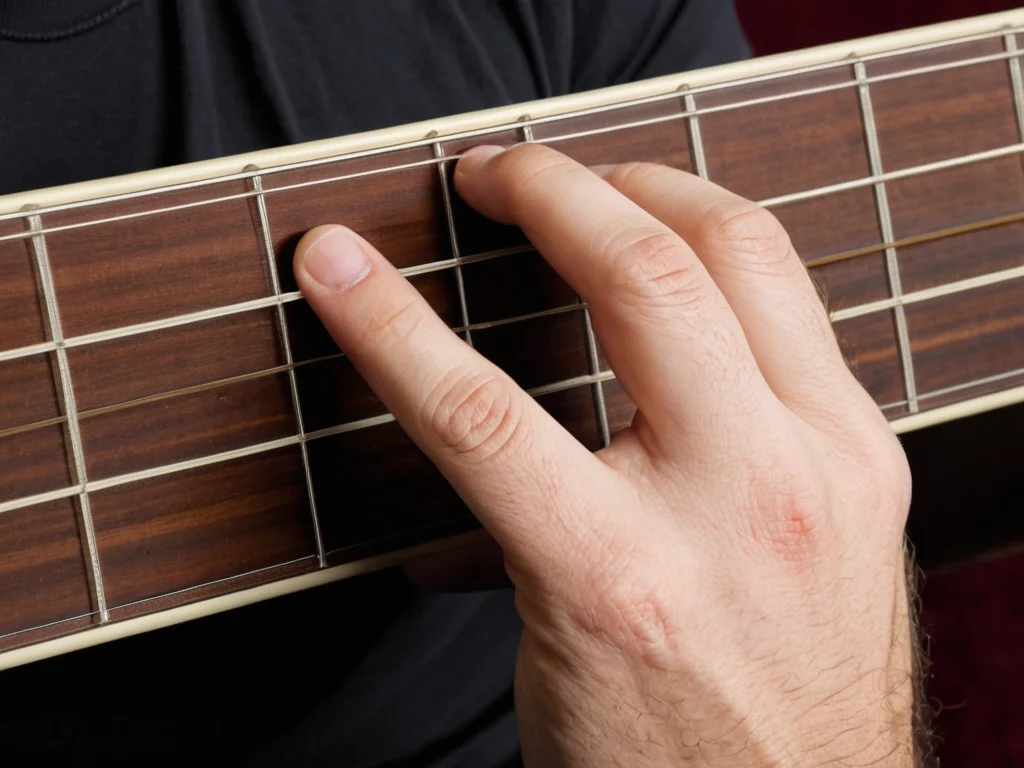
- Power Chords: Focus on keeping your palm in place while playing open E and A minor power chords. Feel how the muted sound adds texture to these simple shapes.
- Strumming Patterns: Try alternating between palm-muted strums and regular ones over a single chord or progression. Notice the difference in tone and rhythm this creates.
Advanced Applications
Once you've got the basics down, try incorporating palm muting into more complex scenarios like riffs and solos:
- Riffs: Experiment with palm-muting techniques in classic rock songs such as Metallica's Fuel. These riffs often feature a combination of muted chords and single-note runs.
- Solos: Use palm muting to add variety during guitar solos. It can help create staccato notes or punctuate phrases for emphasis.
Common Mistakes
Mistakes are a natural part of the learning process, and with palm muting, it's common to encounter issues like:
- Placing your hand too far back on the strings, which can make notes unclear.
- Palm muting too heavily, causing deadened sound quality or reduced volume.

To correct these mistakes, practice moving your palm in and out of contact with the strings while playing. Focus on maintaining a balance between muting and clarity.
Practice Routine
Incorporate palm muting into regular practice sessions:
- Warm-Up: Start each session by practicing basic chords and strumming patterns with palm muting.
- Chord Progressions: Work on switching between different chord shapes while keeping your palm in place.
- Riffs & Solos: Apply the technique to riffs and solos for added depth and rhythmic variation.
Song Examples
Listen to songs that prominently feature palm muting, such as Fuel by Metallica or Painkiller by Judas Priest. These tracks showcase how the technique can enhance your playing and contribute to iconic guitar sounds.